Best Beaches in Oslo: Island Swimming and Sunbathing Guide
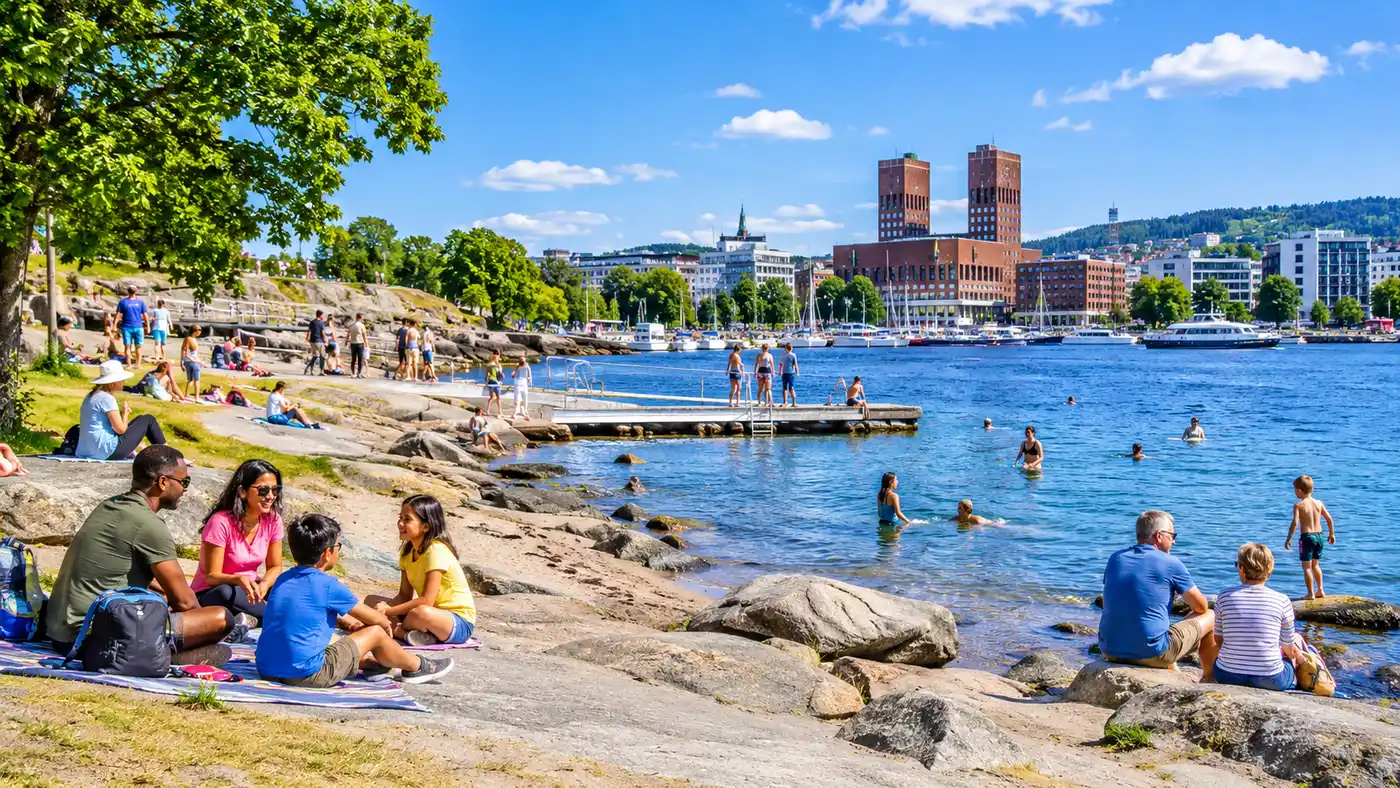
Most visitors think of Norway as a place of wool sweaters, deep snow, and dark winter afternoons. Then July arrives in the capital, the sun stays up until nearly eleven at night, and everyone flees the concrete baking around Jernbanetorget to hunt down the best beaches oslo has tucked into its fjord. You do not need a rental car or an expensive private boat tour to find them. You just need a standard local transit pass, a towel, and a willingness to step onto a small commuter ferry at Rådhusbrygge 4.
The inner Oslofjord holds an entire cluster of car-free islands, each with its own quirks, shoreline textures, and microclimates. While locals often pack the wooden docks of Sørenga and the manicured lawn at Tjuvholmen like sardines on a hot Saturday, the real swimming culture belongs out on the water. Out on the islands, pine trees run right down to granite slabs, saltwater laps against quiet gravel coves, and the pace drops to an easy, slow crawl. Whether you want soft sand beneath your toes, a deep-water ledge to dive from, or a quiet rocky shelf where you can drop your swimsuit without anyone batting an eye, here is how to navigate the beaches scattered across Oslo's islands.
Book your oslo island hopping experience:
Langøyene: The Only True Sand Beach on the Islands
If your idea of a beach requires actual sand between your toes rather than smooth bedrock, Langøyene is where you want to be. It sits further south into the fjord than its neighbors, taking around 25 minutes on the ferry from the city center. Decades ago, this island was actually two separate landmasses with a garbage dump filling the gap between them. That history usually shocks first-time visitors because the city spent years capping, sealing, and rehabilitating the entire valley. Today, it is a wide expanse of green lawn fringed by a proper crescent sand beach that slopes gently into clean, calm water.
Families naturally gravitate toward the northern bay. The shallow entry makes it safer for small children who want to splash around without immediately tumbling into deep fjord currents. You will see people hauling wheeled coolers, portable sunshades, and giant inflatable flamingos across the grass. There are clean modern restrooms, outdoor freshwater rinse showers, and an active kiosk selling soft-serve ice cream and cold drinks for around 48 kroner.
Note: Wind picks up noticeably on Langøyene in the late afternoon. If the breeze turns chilly off the open fjord, move your towel across the central field to the east-facing rocks where the pine ridge blocks the gusts.
Walk across the central field toward the southern shore, and the atmosphere shifts. The southern point forms a rocky, private cove known across the city as one of the premier naturist spots in the fjord. People have been sunbathing in the buff here for generations. Nobody stares, nobody makes a scene, and clothing is entirely optional along those southern stone ledges. If you want to pitch a tent overnight after swimming, check out our Langøyene Island camping guide to see the rules regarding free municipal camping zones on the island.
Hovedøya: Monastery Ruins and Secret Rocky Coves
Hovedøya is the island you see right out the windows of the ferry terminal, sitting just five to eight minutes from the mainland. Most people know it for the 12th-century Cistercian monastery ruins hidden among the birch trees, but it also happens to contain some of the most accessible swimming water in town. Because the ferry ride is so quick, it fills up fast on warm weekdays as soon as office workers finish their shifts around four in the afternoon.
You have two distinct beach zones here. The primary Hovedøya island beach area rests on the southwestern shore, looking out toward Lindøya and Gressholmen. Here, you find a gentle mix of sand, small rounded pebbles, and grassy slopes where ancient deciduous trees cast just enough shade for pale skin. The seabed stays relatively shallow for roughly fifteen yards before dropping away into deep, clear green water. It feels civilized, complete with a tiny seasonal café housed in a red wooden building up the path.
- West Beach: soft sand mixed with fine gravel, ideal for laying out flat towels and wading in gradually.
- Southeast Cliffs: steep limestone ledges where you can step directly into six meters of water from metal ladders.
- Monastery Meadow: soft inland grass, great for drying off when the beach stones feel too warm under midday sun.
- Ferry Pier Rocks: quick swim spot if you only have an hour between ferries and do not want to hike across the island.
If you dislike sand in your shoes, skip the main beach entirely. Walk east through the nature reserve, past the sheep grazing behind wooden fences, until you hit the limestone ledges. Over centuries, the rock here formed tilted, flat shelves that warm up like radiators under the midday sun. You can lay your towel directly onto the warm stone and slip straight into deep water using the public swimming ladders bolted into the stone. The water tends to be clearer off these rocks than on the sandy side, mainly because foot traffic does not churn up the silt.
Gressholmen: Wild Shorelines and Naturist Sunbathing
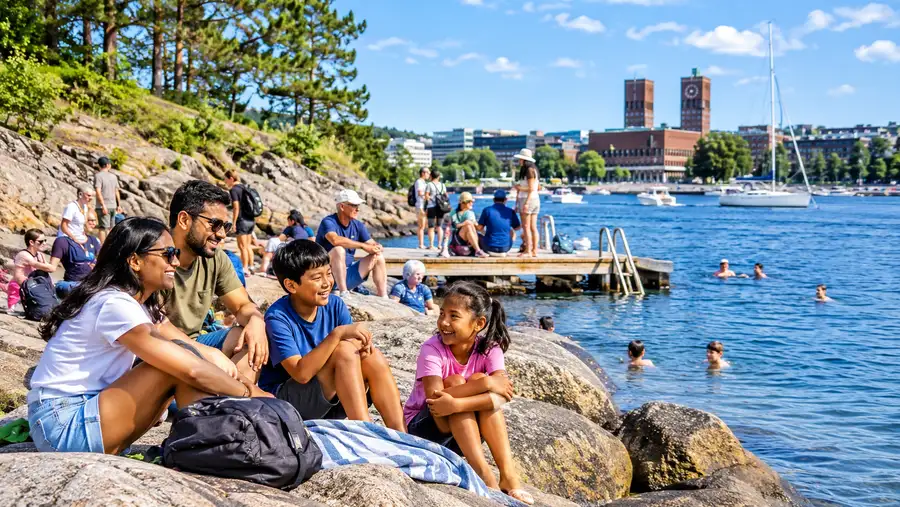
Gressholmen has an eccentric history. It hosted Norway's first main water airport in the late 1920s, and you can still see the old aircraft hangar and concrete sea ramp near the dock. Today, the island connects via small land bridges to its sister islets, Rambergøya and Heggholmen. Together, they create a rambling, slightly wild landscape of coastal meadows, sheltered inlets, and low pine woods that feel hundreds of miles away from a European capital city.
Swimming here is decentralized. You will not find one massive central strip of sand where everyone clusters. Instead, small trails branch out into the coastal forest, leading to miniature shingle bays and flat stone points. The main eastern cove, often referred to locally as a reliable gressholmen badeplass, features a quiet gravel shoreline with clear visibility through the water. It stays quiet even on weekends because casual day-trippers often give up walking and stop at the first clearing they find.
Pro tip: Pick up rubber water shoes at a sporting goods shop in town before you go. The rocks around Gressholmen have patches of barnacles and slick sea lettuce that can slice your soles or make climbing out tricky.
A few trails meander over to Rambergøya, connected by a narrow wooden bridge crossing a tidal salt marsh protected for nesting birds. Follow the path south, and you will hit another famous spot: the traditional gressholmen naturist area. The rocks here tumble down toward the water at comfortable angles, creating natural loungers out of bare stone. People come here specifically to avoid swimsuit lines, read paperbacks, and plunge into cold, deep water. Whether you choose to swim clothed at the main gressholmen beach or strip down on the remote southern slabs, bade gressholmen style means embracing a quiet, natural environment with almost no commercial development.
When you finish your swim, the historic wooden inn near the docks serves cold local beer and shrimp sandwiches. Sitting on that wooden patio with salt crusted on your skin while waiting for the boat back to the city is hard to beat.
Book your oslo island hopping experience:
Comparing Oslo's Island Swimming Spots
Every island caters to a slightly different type of afternoon. Some people need hot showers and snack bars, while others want total silence broken only by the hum of an occasional sailboat engine. The table below breaks down the practical differences so you do not carry a heavy cooler down a rocky goat track by mistake.
| Island Beach | Ferry Time | Shore Type | Facilities | Best For |
|---|---|---|---|---|
| Langøyene | 25 mins | Wide sand, lawn | Toilets, showers, kiosk | Families, sand lovers, campers |
| Hovedøya | 8 mins | Gravel, grass, rock | Toilets, cafe, water pump | Quick dips, history walks |
| Gressholmen | 15 mins | Pebble, stone shelves | Toilets at dock, restaurant | Peace and quiet, hiking, skinny dipping |
| Lindøya | 18 mins | Wooden piers, rocks | Toilets near piers, grocery shop | Dock swimming, cabin spotting |
If you want to map out the ferry connections between these spots, read through our guide to Oslo island ferries before heading down to the harbor. Missing the last ferry of the evening leaves you stranded until morning unless you are prepared to call an expensive private water taxi.
Practical Advice for Swimming in the Oslofjord
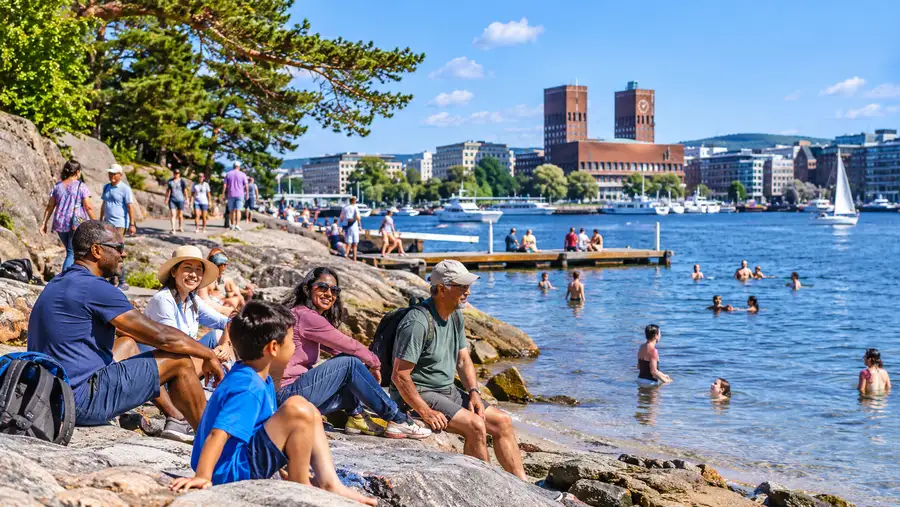
Summer water temperatures in the fjord can surprise you. In late June and through July, the surface water in shallow bays often creeps up to 20 or 21 degrees Celsius, which feels plenty comfortable after walking in the sun. Deep-water spots off the rocky ledges usually hover around 17 or 18 degrees, providing an eye-opening shock that shakes off any lingering travel fatigue. Honestly, once you dive under, you adapt within thirty seconds.
Island etiquette in Norway runs on common sense and deep respect for public access. The right to roam allows you to walk along the coast and swim almost anywhere, but you must keep your distance from private boat slips, painted red holiday cabins, and protected bird sanctuaries.
- Ticket validation: buy a standard Zone 1 Ruter pass on your phone before boarding; ticket inspectors check passengers regularly at the island turnstiles.
- Trash management: carry every piece of rubbish back to the main dock bins, as smaller island bins overflow quickly when crowds peak.
- Campfires and grilling: open fires are strictly banned across the islands during summer, and disposable foil barbecues are prohibited on bare rock surfaces because the heat cracks the stone.
- Hydration: refill your water bottles at the dockside spigots, because coastal salt air and strong fjord winds dehydrate you faster than you notice.
Keep a close eye on the ferry departure board via the transit app. On cloudless Sundays when the city hits 28 degrees, everyone tries to return home between five and seven in the evening. Lines at the docks can stretch fifty yards long. The boats run frequently, but you might end up waiting for the second or third boat if the deck hits its safety limit.
Frequently Asked Questions about best beaches oslo
What is the warmest month to swim in Oslo?
Late July and early August offer the warmest water temperatures in the fjord, typically settling between 19 and 22 degrees Celsius in sheltered bays.
Do I need cash to buy snacks or ferry tickets on the islands?
No, Norway is practically cashless. Use the Ruter mobile app for ferry tickets and your standard credit or debit card for the island kiosks and cafes.
Are dogs allowed on the island beaches?
Dogs are allowed on the islands, but Norway enforces strict leash laws between April and late August. They are generally banned from primary public bathing beaches like the sand area on Langøyene during summer peak hours.
Quick Reference
- Standard Zone 1 transit ticket covers all ferries
- Ferries depart every 20-30 minutes from Rådhusbrygge 4
- Langøyene has the only large sandy beach
- No cars, e-scooters, or bikes allowed on island ferries
Book your oslo island hopping experience:
My Take
Oslo gives you something very few European capitals can match: a genuine maritime beach day fifteen minutes away from the royal palace. Pack a light canvas tote with bread, cheese, and a bottle of mineral water, catch the line B1 ferry from Pier 4, and jump in. You will realize immediately why city streets empty out the second the sun breaks through.
Read more about oslo island hopping.